HAIRLINE LOWERING (FOREHEAD REDUCTION)
The ideal length of the female forehead is 1/3 of the length of the face. This varies based on facial shape, size and brow position.
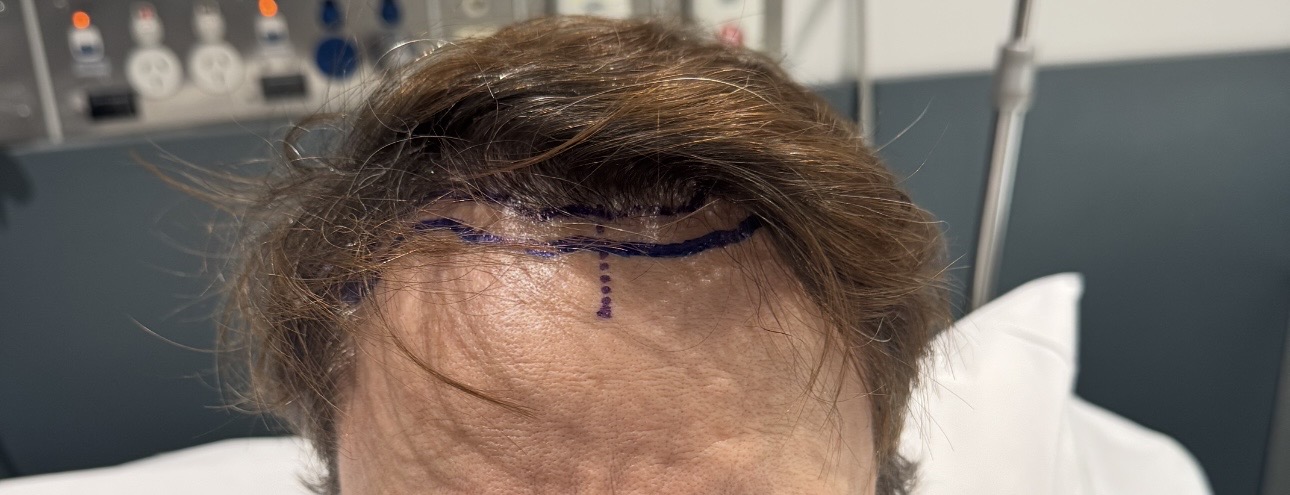
Hairline lowering, also known as forehead reduction, moves the hairline forward to reduce the apparent height of the forehead and create a more balanced facial profile. Whether it is suitable depends on your hairline, scalp mobility, hair density and goals. A consultation allows your surgeon to assess these factors and discuss the potential benefits and risks.
Who may be suitable?
Hairline lowering may be considered by people who feel their forehead is proportionally high and have enough scalp mobility to allow the hairline to be advanced. Hair density and the pattern and stability of hair growth are also important considerations.
Your surgeon will assess your facial proportions, hairline shape, scalp laxity and hair-loss history before recommending a treatment plan. The procedure may not be suitable for everyone.
the procedure
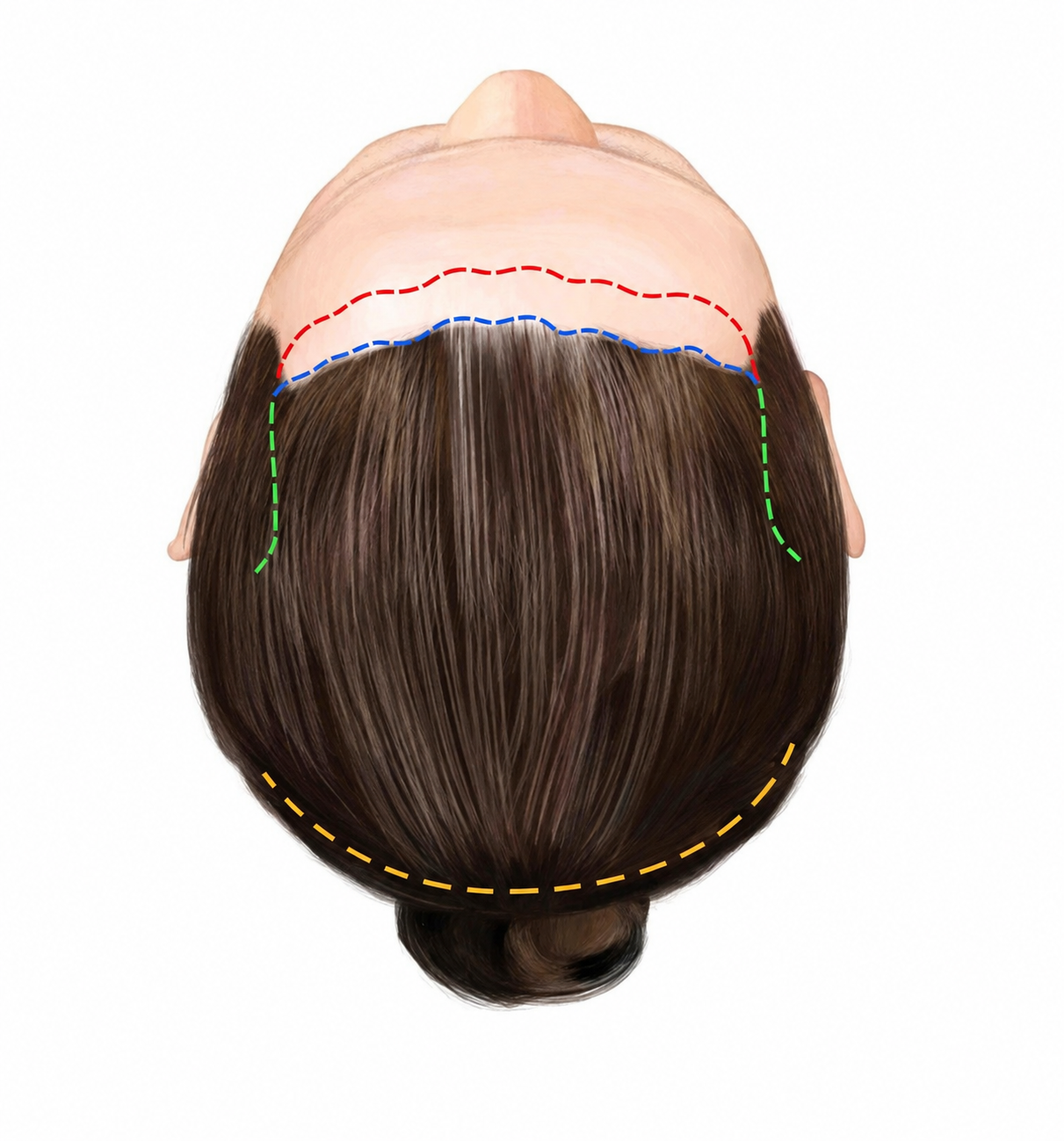
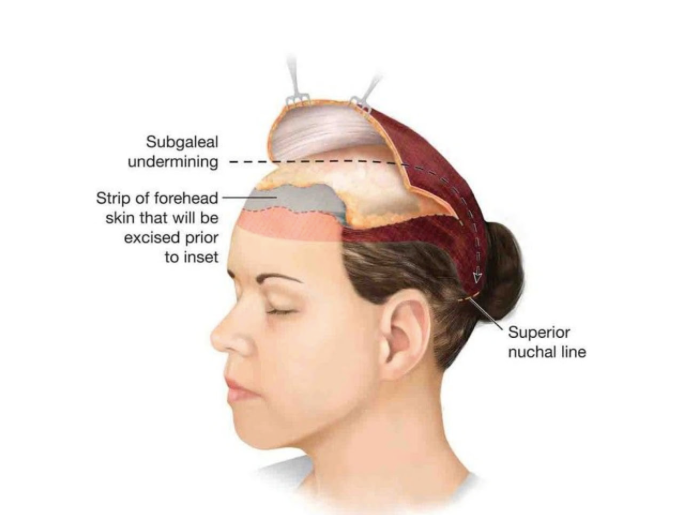
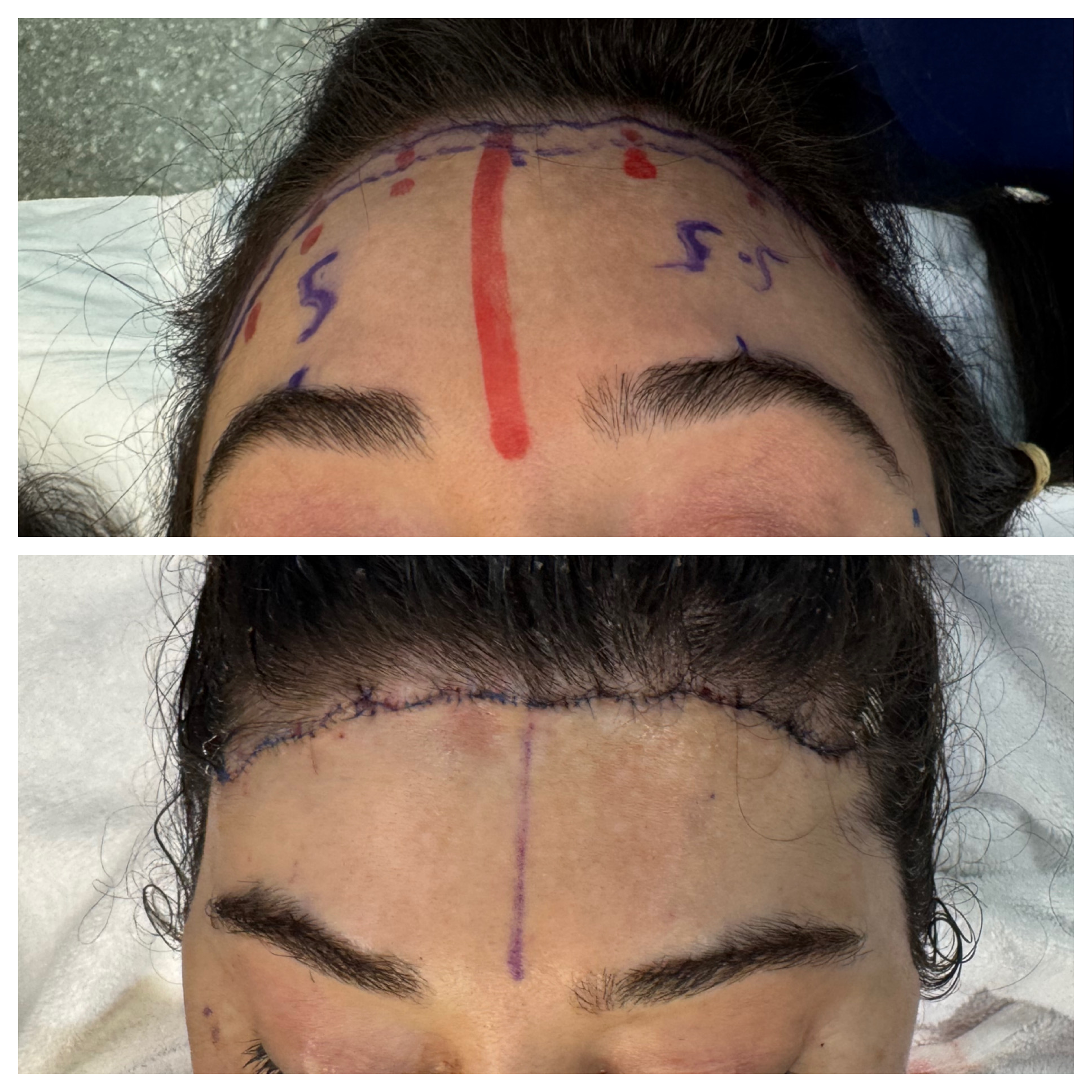
The operation advances the scalp and hairline forward, with the aim of reducing forehead height. The incision is planned to follow the natural contours of the hairline.
The surgical principles may include an undulating, bevelled trichophytic incision, subgaleal dissection towards the superior nuchal line, and galeotomies to help mobilise the scalp while preserving its blood supply. The scalp is then advanced and may be stabilised using sutures placed through small cortical bone tunnels.
The exact approach is tailored to the individual. Your surgeon will explain the intended incision, the likely degree of advancement and the limitations of surgery during your consultation.
Combining hairline lowering with a brow lift
A brow lift may be performed at the same time as hairline lowering for selected patients. The procedures address different areas: hairline lowering advances the scalp, while a brow lift changes the position of the brows. Combining them may help achieve a more balanced result when both the hairline and brow position are concerns.
Not everyone will benefit from having both procedures. Your surgeon will assess your brow position, facial proportions and desired outcome, and discuss whether combining surgery is appropriate.
Common Concerns
All surgery carries risks. Possible complications of hairline lowering include:
- Visible or uneven scarring, including scars that become lighter or darker than the surrounding skin
- Scalp numbness or altered sensation
- Hair loss, including temporary shock hair loss (telogen effluvium)
- Hair loss along the incision or patchy areas of scalp hair loss
- Aesthetic concerns, such as recession at the temples or a hairline that appears too straight or insufficiently rounded
Your surgeon will discuss the risks relevant to you, ways they may be reduced and what can be done if a complication occurs.
Recovery varies between individuals. Your surgeon will provide specific instructions about wound care, activity and follow-up appointments. The incision and surrounding scalp may take time to heal and settle, and the appearance of the scar and hairline can continue to change as healing progresses. Ask your surgeon when it is appropriate to return to work, exercise and usual activities.
Frequently Asked Questions
A bevelled trichophytic incision is designed to allow hair to grow through or in front of the scar, which may help camouflage it. Scar visibility varies, however, and cannot be guaranteed to be unnoticeable.
Hair loss is a recognised risk. Some patients may experience temporary shedding after surgery; hair loss can also occur along the incision or in patchy areas. Your surgeon can discuss how your existing hair density and pattern may affect your risk.
The hairline is planned around your existing shape and facial proportions. Aesthetic concerns can include a hairline that looks too horizontal or recession at the temples, so the intended shape and realistic outcome should be discussed before surgery.
Possibly. A brow lift can be combined with hairline lowering for suitable patients, but whether it is advisable depends on your brow position, scalp mobility and overall goals. Your surgeon can explain the options after an individual assessment.
Altered sensation, including numbness or dysaesthesia, is a possible complication. Its duration and extent vary. Your surgeon can explain what to expect and when to seek advice during recovery.
book a consultation
"*" indicates required fields